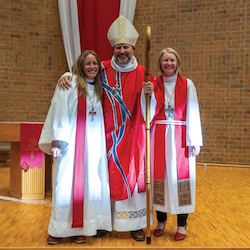
When members of the ELCA picture a bishop, what might come to mind is a figure of authority. An executive decision-maker who oversees synodical operations. A quick resolver of local congregational disputes. A person with access to a vast network and infinite resources. For current and former bishops alike, their lived experiences tell a different story.
Debunking the power myth
Despite years of prior experience navigating the ebbs and flows of the church, bishops don’t hold a playbook for what a synod should do next.
“People believe bishops have more power than they actually do in conflict or troubling situations,” says Deborah Hutterer ’04 M.Div., bishop of the Grand Canyon Synod since 2018 and chair of the ELCA Conference of Bishops. “In the end, we do have influence and experiences to share that can make a difference.”
This misunderstanding of power versus influence often extends to the congregational level, where churches can expect bishops to intervene in local friction or leadership transitions.
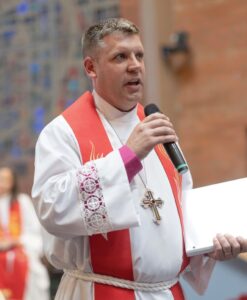
Ben Quanbeck ’08 M.Div., bishop of the Montana Synod since 2025, says he has encountered communities looking for a quick fix or a central authority to settle disputes. And while he wishes he had all the answers, the reality is far more complex.
“In the midst of conflict, congregations believe the bishop can just step in and solve the issue,” Quanbeck explains. “Conflict takes a lot more work between the parties.”
Elected to her role as bishop of the Western North Dakota Synod in May, Lisa Lewton ’04 M.Div. asked herself early on, “I wonder if there was ever a time when bishops knew what to do next?” She says that she instead considers what the Spirit is doing already, catching up along with everyone else.
“If anybody thinks the bishop comes in and tells us what to do next, that would be a misunderstanding of the call,” Lewton says.
Verbs for success
If the role isn’t powered by strict regulation or insider access, what actually drives the ministry of a bishop toward success?
Rick Foss ’71 M.Div., ’84 Th.M., former bishop of the Eastern North Dakota Synod, and former interim president and director of contextual learning at Luther Seminary, put this question to the test. Early in his 16-year tenure as bishop, Foss placed a list of 112 verbs in front of pastors and lay leaders at retreats and conference assemblies, asking them to circle the actions essential to a bishop’s work. He repeated the study two years later, and the results remained unchanged.
“The runaway winner was ‘listen,’” Foss says. “People trust people who listen to them. If you want to be trusted, you’ve got to listen.”
Rounding out the top 10 verbs (in order) were encourage, inspire, love, pray, laugh, challenge, nurture, motivate, and visit.
Foss compares his findings to the Model Constitution for Congregations, a document that lists many of the essential duties of a bishop, noting that the top 10 verbs chosen by the synod had nothing to do with governance.
“There’s nothing about regulation or oversight or any of that stuff,” he notes. “The work of the bishop is fundamentally relational.”
For current bishops, putting these relational verbs into practice forms the core of their daily work. Quanbeck highlights how easily the role can get bogged down in administrative tasks if relationality isn’t prioritized.
“The role of bishop can very easily become administrative,” Quanbeck says. “We can lean into the Conference of Bishops and all the paperwork and all the emails. But at the end of the day, we’re dealing with people on their own faith journey, with real-life joys and struggles. I really try to meet them where they are, share the gospel when I can, and then provide good administration to support that work. Investing in relationships is the way that we can do good ministry together.”
Critical partnerships
Because authority in the church is rooted in community, effective leadership requires staying connected across tables, synods, and peer networks. For Justin Grimm ’05 M.Div., this means “leading from the middle” and “shepherding the synod” as a whole.
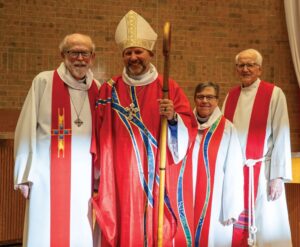
“I try to see the giftedness of those around me and push them forward,” Grimm, who was elected as bishop of the Saint Paul Area Synod in May, explains. “I put a great team around me. I know I don’t have all the gifts, but together with the folks around me and by the grace of God, we do.”
Jon Anderson ’85 M.Div., who served as bishop of the Southwestern Minnesota Synod before becoming Luther Seminary’s director of rural ministry, also stresses the collaborative nature of the office. He emphasizes that, over the course of his 18 years of service as bishop, he never considered his synodical leadership a solo act.
“My teammates in Southwest Minnesota filled in my gaps. They had strengths and experiences we needed,” Anderson says. “They helped us do the work of the synod in a better way. Those folks should be equally appreciated for their challenging work and commitment to serve God’s world and God’s church.”
“So much of what we learn about life and theology and relationships happens around tables,” Lewton explains. “My hope is that, like I learned at Luther, we’re always sitting down next to each other to listen and to see Jesus in our neighbor—to make room at the table for our differences. We have a job to do as Christians to make Christ known to our neighbor.”
Grimm agrees, reminding members of the church of the core promise made in baptism: letting their light shine, no matter the circumstance.
“That’s not when you feel like it. It’s not if you have time. That’s the call for all of us,” he says. “We’re in this together. And if we say we’re church together, that means all of us.”
A spin on the shortage
A challenging reality facing nearly every synod across the ELCA is pastoral shortages, particularly in small-town and rural contexts. Despite what many congregations may perceive, the office of the bishop doesn’t hold a secret reserve of available clergy to choose from—and the road to finding the right fit can be long. In Montana’s 115 congregations, for example, only around 45 pastors are available to serve.
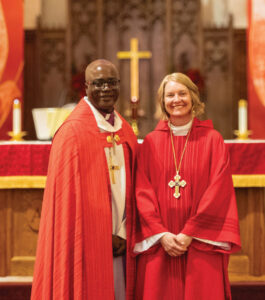
Rather than viewing this dilemma with despair, many bishops are actively reframing the narrative—shifting the emphasis from a scarcity of ordained clergy to an abundance of gifted lay leaders.
In North Dakota, Lewton combats the shortage of pastors with “an army of lay leaders who just want to be helpful.” She says those who are ordained are called to equip those already following the Spirit in their churches who are willing to discern.
“Right now, there are almost as many lay leaders in Western North Dakota as ordained. This is a synod where clergy get to come and really live into what it means to be lay-led and clergy-supported,” Lewton explains. “I don’t know that we’re short leaders as much as we need to be a little more open to what God might be doing already.”
A shared handshake
Addressing the shifting needs of the church requires close partnership between synodical leaders and seminaries. As the chair of the Conference of Bishops, Hutterer has experienced firsthand the importance of collaboration with seminary leadership to share insights, ensuring theological education responds directly to what’s happening in real time.
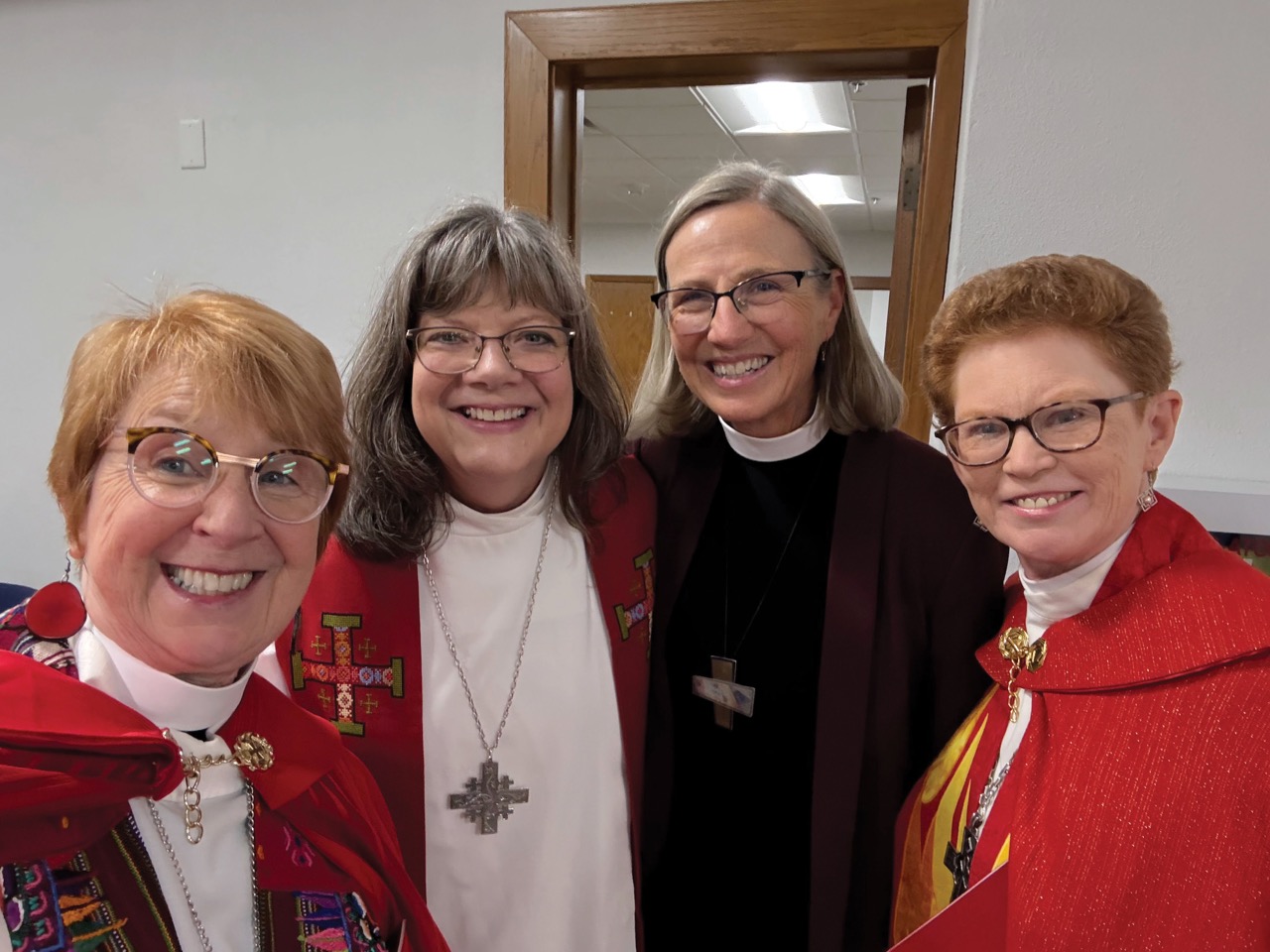
“Last spring, we spent a day together talking about what the opportunities are, where we see better connections can be made, as we continue to look at ways to serve the church faithfully,” Hutterer says. “I find the seminaries to be a really valuable resource, really trying to be responsive to the needs that we’re trying to identify.”
One of the most obvious barriers standing in the way of a seminary education is cost. Twenty-two years after her ordination, Hutterer says she still thinks “about the people who take the time to invest in students and potential pastors and deacons that they will never meet.” As a recipient of a full scholarship, she recognizes Luther’s commitment to making sure other clergy—including future bishops—can be freer to focus on the contexts they are called to serve.
While robust degree programs remain foundational, Hutterer also notes Luther Seminary’s expansion of non- degree learning and digital resources has provided vital support for synods. In particular, she says that Faith+Lead has proven to be an “invaluable resource” within the Grand Canyon Synod, with both rostered ministers and laypeople alike taking advantage of online offerings.
“It’s been foundational for our program in thinking about lay development,” Hutterer says.
Lewton also agrees that, beyond the traditional degree programs it is best known for, Luther has plenty to offer those who can’t commit to a more extensive program.
“As a bishop, it’s such a gift to know all these laypeople, who don’t have the same seminary training, have a good, solid theological resource to turn to in both Working Preacher and Enter the Bible—which I always say is the only Bible site that I fully trust in doing a Bible study,” Lewton says. “Those have been really practical resources that Luther has offered for free, which is amazing.”
A complex goal
A recurring theme among bishops is that theological education must be deeply contextual—that classroom learning comes alive only when integrated into the lived experience of local communities. As Foss reflects on his 2008 transition from bishop to director of contextual learning at Luther, he says it just made sense.
“What I loved most about serving as a bishop was treasure hunting for pastors and the call process. You look for good people and help them fly,” he reflects. “In the same way, contextual learning is the practical aspect of what you’re doing. You need a biblical basis, you need a theological basis, you need all of that. But those are absolutely useless if you don’t embody the church community.”
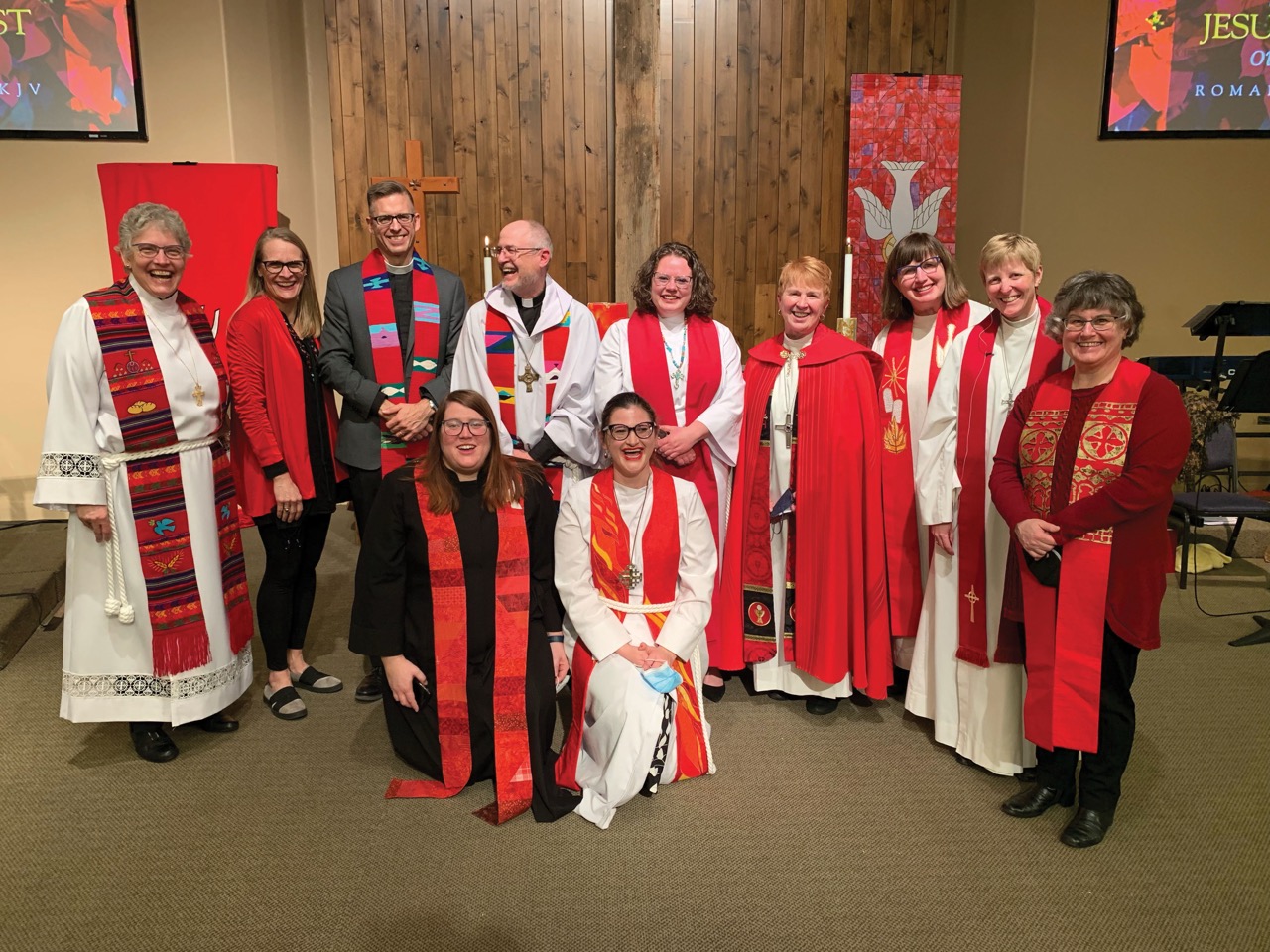
Both Hutterer and Grimm agree, citing Reading the Audience as one of the best classes they took during their time at Luther.
For Grimm, Reading the Audience as taught by Professor Emeritus Craig Van Gelder pushed him “to pour into the community” and unleashed the “demographic nerd” inside of him.
“People trust people who listen to them. If you want to be trusted, you’ve got to listen.”
—Rick Foss ’71 M.Div., ’84 Th.M.
“Luther was really good at reminding me of the importance of actually being present in the context you’re serving, to love your people, to know your people, to know who you’re working with, and to figure out ministry there in the moment,” Grimm recalls. “I took that into mission development. I always said we did ministry with one ear to the ground and one ear to the Spirit. That came directly out of Van Gelder’s class.”
Foss explains that while Luther is equipped with “good people and good questions” that prioritize meaningful connection, the biggest challenge is that ministry isn’t stagnant.
“It’s a moving target,” he says.
Quanbeck suggests that the best way for congregations to hit this target is to take risks. As bishop of the Montana Synod, among his top priorities has been to grant them permission to experiment.
“We should not confuse the message and the medium,” Quanbeck says, reflecting on a core lesson from his Luther experience. “That’s important as congregations are trying new things or as they’re wondering if they can try new things. It’s been life-giving for a number of congregations.”
Grimm says he employs the same tagline to ministry as he does to coaching baseball: fail harder.
“Kids often will not try to take risks because they don’t want to mess up; they’re afraid they’re going to get in trouble. As a church, we need to try to fail harder and fail faster, to be engaged and risk-taking for the sake of the gospel.”
Ultimately, the church has two choices: to timidly sit in the dugout or to move forward toward the home plate, bat in hand. Is it ready to start swinging?